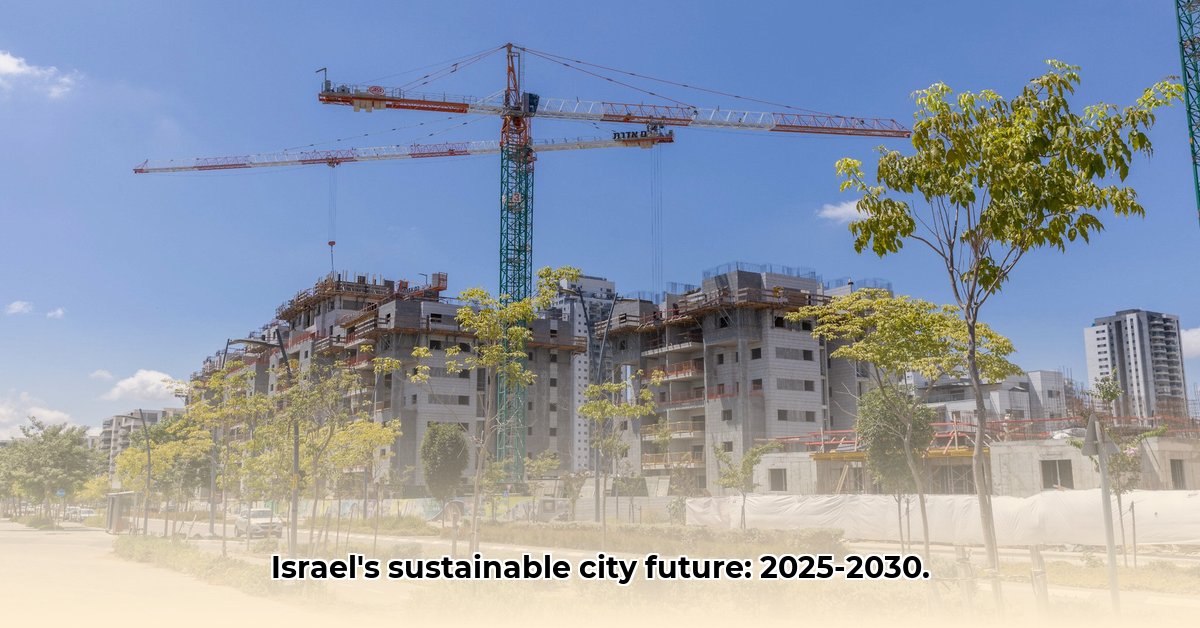
Israel's Urban Landscape: Navigating Rapid Growth
Israel's cities are experiencing a period of rapid population growth, presenting both significant opportunities and challenges for urban development. The next five years (2025-2030) will be critical in shaping the future of Israeli cities, determining whether they can expand sustainably while maintaining their unique character and quality of life. This forecast analyzes the key issues facing sustainable urban planning in Israel, focusing on the potential and pitfalls of densification as a primary growth strategy. For more information on Israeli cities, check out this resource.
The Housing Challenge: Addressing a Growing Shortage
Israel faces a significant housing shortage, exacerbated by rapid population growth. This shortage drives up housing costs, impacting affordability and potentially fueling urban sprawl. The lack of adequate housing is not simply a numerical issue; it profoundly affects individuals' quality of life, influencing their access to employment, education, and social networks. This underscores the urgency of developing effective and sustainable solutions to address the growing demand for housing. Is densification the answer?
Densification: Building Up, Not Out
Densification, the strategic concentration of development in existing urban areas, offers a viable alternative to sprawling outward expansion. This strategy can lead to the creation of vibrant, mixed-use neighborhoods with increased residential density, enhanced walkability, and improved access to amenities. Such an approach could reduce reliance on private vehicles, minimizing traffic congestion and carbon emissions. However, successful implementation requires careful planning and significant investment in infrastructure improvements to support the increased population density.
Challenges and Opportunities: A Balanced Perspective
While densification presents numerous benefits, it also poses challenges. Existing infrastructure (water, sewage, electricity, transportation) may struggle to accommodate a significantly larger population. Moreover, careful planning is crucial to ensure that the benefits of densification are shared equitably across all socioeconomic groups, preventing the exacerbation of existing inequalities. Without careful consideration of these factors, densification could inadvertently intensify existing problems rather than resolve them.
A Multi-Stakeholder Approach: Collaborative Solutions
Successfully navigating this period of rapid urban growth requires a collaborative effort involving several key stakeholders.
1. Government's Role: Strategic Investment and Planning
The Israeli government must play a leading role in fostering sustainable urban development. This involves:
- Investing in infrastructure: Significant investment in public transportation (buses, trains, light rail) is crucial to alleviate traffic congestion and improve accessibility. Upgrades to water, sewage, and energy systems are equally vital. Updating building codes to encourage sustainable, high-density construction is also necessary.
- Implementing pilot projects: Smaller-scale densification projects serve as valuable learning experiences, enabling adjustments and refinements before widespread implementation.
- Developing long-term city-wide plans: Comprehensive urban development plans should incorporate densification strategies, considering the unique contextual factors of each municipality.
- Incentivizing sustainable development: Incentives such as tax breaks for developers building energy-efficient, environmentally friendly buildings can encourage sustainable practices.
2. Developers' Responsibilities: Sustainable Building Practices
Developers have a critical role in creating sustainable urban environments. This includes:
- Building mixed-use developments: Designing buildings that combine residential, commercial, and recreational spaces encourages a more dynamic and socially cohesive urban fabric.
- Prioritizing green building practices: Embracing sustainable building materials and construction techniques minimizes the environmental footprint of new developments.
- Engaging in public-private partnerships: Collaborating with the government and other stakeholders facilitates resource sharing, expertise exchange, and faster project implementation.
3. Citizen Engagement: Active Participation and Advocacy
Citizen engagement is essential for successful urban development. Individuals can:
- Participate actively in community planning: Contributing ideas and concerns ensures that the development process reflects the needs and aspirations of the community.
- Advocate for affordable housing: Supporting policies that guarantee housing choices for individuals from all socioeconomic backgrounds promotes social equity.
- Embrace sustainable lifestyle choices: Adopting environmentally responsible behaviors in transportation, consumption, and waste management contributes to a more sustainable urban environment.
4. Environmental Organizations: Monitoring and Advocacy
Environmental NGOs play a vital role in holding stakeholders accountable for environmental protection and sustainability. Their crucial functions include:
- Monitoring and evaluating the environmental impacts of development: Independent assessments provide objective evaluations of projects' sustainability.
- Advocating for stricter environmental regulations: Stronger regulations help prevent environmental damage and ensure compliance with sustainability standards.
- Educating the public about sustainable urban development: Raising public awareness fosters broader support for environmentally responsible practices.
Potential Risks and Mitigation Strategies
Several potential risks accompany densification. Proactive mitigation strategies are essential.
| Risk Factor | Mitigation Strategy |
|---|---|
| Infrastructure Overload | Phased development, strategic infrastructure upgrades, smart city technologies |
| Social Inequality | Affordable housing initiatives, equitable zoning, community engagement programs |
| Environmental Degradation | Stringent green building codes, sustainable transportation options, robust waste management systems |
| Political Opposition | Transparent planning processes, extensive public consultations, building broad-based support |
Conclusion: Shaping a Sustainable Urban Future
Israel's urban future hinges on its ability to successfully manage rapid population growth. By embracing sustainable densification strategies and fostering collaborative partnerships among government, developers, citizens, and environmental organizations, Israel can create vibrant, livable, and environmentally responsible cities that benefit all its residents. The coming years will be pivotal in determining whether the nation effectively addresses these challenges and secures a sustainable urban future.